This is a classic, mild, Indian-style curry (said to have been invented either in Manchester or Birmingham) that's been adapted to be cooked quickly in a pressure cooker.
Pressure Cooker Chicken Korma
Ingredients:
675g chicken breasts, cut into 3cm cubes
120g ground almonds
3cm length of fresh ginger, peeled and sliced thinly
1 garlic clove, crushed
2 fresh green chillies, chopped
2 tbsp vegetable oil
1 onion, finely chopped
1 tsp ground turmeric
4 green cardamom pods
4 cloves
3cm length of cinnamon
1 tsp coriander seeds
1 tsp cumin seeds
1 tsp cornflour (cornstarch)
300ml Greek yoghurt
juice of 1/2 lemon
25g creamed coconut
salt, to taste
2 tbsp fresh coriander, chopped
Method:
Combine the almonds, ginger, garlic and chillies in a mortar and pound to a paste.
Heat the vegetable oil in the base of your pressure cooker. Add the onion and fry for about 6 minutes, or until golden brown then stir in the turmeric, cardamom, coriander seeds, cloves and cumin seeds. Fry for 1 minute then add the almond paste and fry for 1 minute more before stirring in the yoghurt and chicken pieces. Stir to coat in the yoghurt mix then add 300ml water.
Secure and lock the lid then bring to pressure over high heat. Reduce the heat to stabilize the pressure and cook for 12 minutes. Take the pressure cooker off the heat, place under cold, running water to reduce the heat quickly. In the meantime, mix the cornflour to a slurry with 2 tbsp water. Whisk this into the curry mixture in the pressure cooker then bring to a simmer and cook, uncovered until thickened.
Stir in the lemon juice, creamed coconut and coriander leaves then season to taste with salt. Cook until the coconut has melted into the sauce then serve hot, accompanied by rice.
See the following page for more classic pressure cooker recipes.
For all the curry recipes on this blog, see the curry history and curry recipes page.
Sunday, 14 August 2011


Friday, 12 August 2011
Macaroni with Minced Meat and Bechamel Sauce recipe from Cyprus
The following is a classic Cypriot dish:
Macaroni with Minced Meat and Bechamel Sauce
Ingredients:
For the Béchamel Sauce:
1l milk, boiling
60g butter
6 tbsp plain flour
2 eggs
90g Halloumi cheese, grated
pinch of salt
500g thick, long, macaroni (sometimes called tubular spaghetti)
650g minced pork
5 tbsp olive oil
1 tsp onion, grated
flat-leaf parsley, finely chopped
1 tbsp butter
2 eggs, lightly beaten
200g Halloumi cheese, grated
salt and freshly-ground black pepper, to taste
grated Halloumi cheese, for sprinkling.
Method:
Begin with the Béchamel sauce. Bring the milk to a boil then take off the heat and set aside. Melt the butter in a pan, scatter over the flour and stir to form a smooth roux. Gradually whisk in the boiling milk until smooth and completely incorporated. Heat until thickened then take off the heat and set aside for 2 minutes to cool.
Beat the eggs in a bowl. When the sauce has cooled, add two ladlefuls into the eggs then whisk the egg mixture back into the sauce. Add the grated Halloumi cheese and stir to combine then set aside.
Now prepare the meat mixture. Heat the olive oil in a pan. Add the minced pork and onion. Season to taste and fry over medium heat until the meat has released its liquid and this has evaporated away and the meat is browned.
Add the parsley and stir briefly then take off the heat. In the meantime, bring a pan of lightly-salted water to a boil and add the macaroni. Cook for about 12 minutes, or until just tender. Drain the macaroni then return to the pan. Add the butter, the eggs and the Halloumi cheese and stir to cook in the heat of the pan (do not put on the hob).
Spread 4 tbsp of the Béchamel sauce in the base of an oven-proof dish (about 28cm square). Lay half the macaroni mixture on top then spread 5 tbsp of the Béchamel sauce on top. Cover with the meat mixture then lay the remaining macaroni on top of the meat. Top with the remaining Béchamel sauce and scatter grated Halloumi cheese on top.
Transfer to an oven pre-heated to 170°C and bake for 40 minutes, or until golden brown on top and bubbling. Serve hot with a crisp green salad and rustic bread.
If you want to see more traditional Cypriot recipes, then here you can find More traditional recipes from Cyprus
Macaroni with Minced Meat and Bechamel Sauce
Ingredients:
For the Béchamel Sauce:
1l milk, boiling
60g butter
6 tbsp plain flour
2 eggs
90g Halloumi cheese, grated
pinch of salt
500g thick, long, macaroni (sometimes called tubular spaghetti)
650g minced pork
5 tbsp olive oil
1 tsp onion, grated
flat-leaf parsley, finely chopped
1 tbsp butter
2 eggs, lightly beaten
200g Halloumi cheese, grated
salt and freshly-ground black pepper, to taste
grated Halloumi cheese, for sprinkling.
Method:
Begin with the Béchamel sauce. Bring the milk to a boil then take off the heat and set aside. Melt the butter in a pan, scatter over the flour and stir to form a smooth roux. Gradually whisk in the boiling milk until smooth and completely incorporated. Heat until thickened then take off the heat and set aside for 2 minutes to cool.
Beat the eggs in a bowl. When the sauce has cooled, add two ladlefuls into the eggs then whisk the egg mixture back into the sauce. Add the grated Halloumi cheese and stir to combine then set aside.
Now prepare the meat mixture. Heat the olive oil in a pan. Add the minced pork and onion. Season to taste and fry over medium heat until the meat has released its liquid and this has evaporated away and the meat is browned.
Add the parsley and stir briefly then take off the heat. In the meantime, bring a pan of lightly-salted water to a boil and add the macaroni. Cook for about 12 minutes, or until just tender. Drain the macaroni then return to the pan. Add the butter, the eggs and the Halloumi cheese and stir to cook in the heat of the pan (do not put on the hob).
Spread 4 tbsp of the Béchamel sauce in the base of an oven-proof dish (about 28cm square). Lay half the macaroni mixture on top then spread 5 tbsp of the Béchamel sauce on top. Cover with the meat mixture then lay the remaining macaroni on top of the meat. Top with the remaining Béchamel sauce and scatter grated Halloumi cheese on top.
Transfer to an oven pre-heated to 170°C and bake for 40 minutes, or until golden brown on top and bubbling. Serve hot with a crisp green salad and rustic bread.
If you want to see more traditional Cypriot recipes, then here you can find More traditional recipes from Cyprus
Zarzuela, a traditional Spanish Seafood dish
Today's recipe is for a classic Spanish seafood dish, Zarzuela:
Seafood Zarzuela
For the Seafood:
12 mussels, scrubbed clean and de-bearded
12 clams, scrubbed clean and rinsed
250ml dry white wine
250g monkfish fillets, skinned and sliced into large chunks
250g halibut fillet, sliced into large chunks
6 king prawns, peeled (but with tail fins left on)
5 tbsp virgin olive oil
6 cooked langoustines (Dublin bay prawns)
sea salt and freshly-ground black pepper, to taste
2 lemons cut into wedges, to garnish
For the Picada:
2 slices of white bread, fried and cubed
2 garlic cloves, coarsely chopped
9 almonds, coarsely chopped
125ml extra-virgin olive oil
For the Sofregit:
2 tbsp olive oil
1 onion, finely chopped
1 garlic clove, crushed
2 tsp sweet paprika
200g tinned, chopped, tomatoes
1/2 tsp saffron threads, crumbled and soaked in 1 tbsp boiling water
3 bayleaves
sea salt and freshly-ground black pepper, to taste
Method:
Begin with the picada. Combine the fried bread, garlic and almonds in a small food processor. Process finely, then, with the motor still running, slowly add the oil to form a loose paste.
For the shellfish, place the wine in a large pan and bring to a boil. Add the mussels and clams, cover and cook over medium heat for about 2 minutes (shake the pan frequently), or until the shells have opened. Arrange a colander over a bowl and pour in the mixture. Transfer the shellfish to a bowl and cover loosely. Reserve the stock to make your sofregit.
Now prepare the sofregit itself. Heat the oil in a pan, add the onion and garlic and fry gently for about 8 minutes, or until soft and golden brown. Stir in the paprika, tomatoes and the saffron water. Now pour in the reserved shellfish stock (leave any sediment behind). Add the bayleaves and season with salt and black pepper. Bring to a simmer, cover and cook gently for 10 minutes (add water or wine if the mixture becomes too thick).
Season the fish and prawns liberally with salt and black pepper. Heat 2 tbsp of the oil in a large frying pan, add the monkfish and halibut pieces and fry until golden brown on both sides. Remove from the pan and set aside to keep warm. Stir 3 tbsp water into the pan to deglaze and pour this liquid into the sofregit then wipe the pan dry.
Heat the remaining 3 tbsp oil in the pan and when hot add the king prawns and fry until just pink. Add the langoustines and heat through for 1 minute, turning them frequently during this time. Now pour in the sofregit mixture and add the monkfish and halibut back into the pan before stirring in the shellfish. Allow to gently heat through for a few minutes.
Add a few tablespoons of the cooking liquid to the picada then fold this mixture into the seafood sauce. Turn into a large serving dish and accompany with the lemon wedges.
You can find many more classic and traditional Spanish recipes on the Celtnet site, as part of the site's Southern European recipes collection.
Seafood Zarzuela
For the Seafood:
12 mussels, scrubbed clean and de-bearded
12 clams, scrubbed clean and rinsed
250ml dry white wine
250g monkfish fillets, skinned and sliced into large chunks
250g halibut fillet, sliced into large chunks
6 king prawns, peeled (but with tail fins left on)
5 tbsp virgin olive oil
6 cooked langoustines (Dublin bay prawns)
sea salt and freshly-ground black pepper, to taste
2 lemons cut into wedges, to garnish
For the Picada:
2 slices of white bread, fried and cubed
2 garlic cloves, coarsely chopped
9 almonds, coarsely chopped
125ml extra-virgin olive oil
For the Sofregit:
2 tbsp olive oil
1 onion, finely chopped
1 garlic clove, crushed
2 tsp sweet paprika
200g tinned, chopped, tomatoes
1/2 tsp saffron threads, crumbled and soaked in 1 tbsp boiling water
3 bayleaves
sea salt and freshly-ground black pepper, to taste
Method:
Begin with the picada. Combine the fried bread, garlic and almonds in a small food processor. Process finely, then, with the motor still running, slowly add the oil to form a loose paste.
For the shellfish, place the wine in a large pan and bring to a boil. Add the mussels and clams, cover and cook over medium heat for about 2 minutes (shake the pan frequently), or until the shells have opened. Arrange a colander over a bowl and pour in the mixture. Transfer the shellfish to a bowl and cover loosely. Reserve the stock to make your sofregit.
Now prepare the sofregit itself. Heat the oil in a pan, add the onion and garlic and fry gently for about 8 minutes, or until soft and golden brown. Stir in the paprika, tomatoes and the saffron water. Now pour in the reserved shellfish stock (leave any sediment behind). Add the bayleaves and season with salt and black pepper. Bring to a simmer, cover and cook gently for 10 minutes (add water or wine if the mixture becomes too thick).
Season the fish and prawns liberally with salt and black pepper. Heat 2 tbsp of the oil in a large frying pan, add the monkfish and halibut pieces and fry until golden brown on both sides. Remove from the pan and set aside to keep warm. Stir 3 tbsp water into the pan to deglaze and pour this liquid into the sofregit then wipe the pan dry.
Heat the remaining 3 tbsp oil in the pan and when hot add the king prawns and fry until just pink. Add the langoustines and heat through for 1 minute, turning them frequently during this time. Now pour in the sofregit mixture and add the monkfish and halibut back into the pan before stirring in the shellfish. Allow to gently heat through for a few minutes.
Add a few tablespoons of the cooking liquid to the picada then fold this mixture into the seafood sauce. Turn into a large serving dish and accompany with the lemon wedges.
You can find many more classic and traditional Spanish recipes on the Celtnet site, as part of the site's Southern European recipes collection.
Saturday, 6 August 2011
Greens, Beef and Peanut Stew From Madagascar
Today's recipe is a classic stew of greens, beef and peanuts form the island of Madagascar:
Ingredients:
1.5kg kale or cabbage leaves (use savoy cabbage)
1 tbsp salt
2 medium onions
500g minced beef
400g tinned, chopped, tomatoes (with juice)
1 tbsp oil
1/4 tsp curry powder (or to taste)
1/4 tsp freshly-ground black pepper (or to taste)
120g raw peanuts
Method:
Place the kale (or cabbage) leaves and salt in a pan. Cover with water, bring to a boil and cook for about 2 hours until they are no longer bitter and have reduced to the consistency of a paste (add more water as needed and stir frequently).
In a separate pan, fry the onion in the oil for about 5 minutes, or until soft and translucent. Add the tomatoes and cook for about 8 minutes, or until the tomatoes begin to break down. Stir in the beat, breaking any large clumps as you do so. Cook for about 10 minutes, or until the meat is done through. Now stir in the curry powder and black pepper then cover the pan and take off the heat then stir in the peanuts.
When the greens have cooked, make the liquid in the pan with them up to 500ml (either add or remove liquid). Stir in the beef and peanut mixture and bring to a simmer. Cook over medium heat for about 20 minutes, or until the peanuts are al dente and the sauce is thick and reduced.
Adjust the seasonings to taste and serve hot on a bed of rice.
On the Celtnet recipes site you can find more classic recipes from Madagascar, as well as thousands of beef-based recipes and many hundreds of greens-based recipes.
For more African Recipes, see the Celtnet Recipes Blog African Recipes page.
Greens with Peanuts and Minced Beef Recipe
Ingredients:
1.5kg kale or cabbage leaves (use savoy cabbage)
1 tbsp salt
2 medium onions
500g minced beef
400g tinned, chopped, tomatoes (with juice)
1 tbsp oil
1/4 tsp curry powder (or to taste)
1/4 tsp freshly-ground black pepper (or to taste)
120g raw peanuts
Method:
Place the kale (or cabbage) leaves and salt in a pan. Cover with water, bring to a boil and cook for about 2 hours until they are no longer bitter and have reduced to the consistency of a paste (add more water as needed and stir frequently).
In a separate pan, fry the onion in the oil for about 5 minutes, or until soft and translucent. Add the tomatoes and cook for about 8 minutes, or until the tomatoes begin to break down. Stir in the beat, breaking any large clumps as you do so. Cook for about 10 minutes, or until the meat is done through. Now stir in the curry powder and black pepper then cover the pan and take off the heat then stir in the peanuts.
When the greens have cooked, make the liquid in the pan with them up to 500ml (either add or remove liquid). Stir in the beef and peanut mixture and bring to a simmer. Cook over medium heat for about 20 minutes, or until the peanuts are al dente and the sauce is thick and reduced.
Adjust the seasonings to taste and serve hot on a bed of rice.
On the Celtnet recipes site you can find more classic recipes from Madagascar, as well as thousands of beef-based recipes and many hundreds of greens-based recipes.
For more African Recipes, see the Celtnet Recipes Blog African Recipes page.
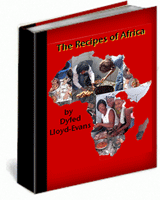
This list of African regions and African recipes is brought to you in association with the Recipes of Africa eBook. With over 1000 recipes covering each and every country in Africa, this is the most comprehensive book of African recipes available anywhere.
If you love African food, or are just interested in African cookery, then the Recipes of Africa eBook is a must-buy. You get information about every region of Africa and every African country along with a selection of classic and traditional recipes from that country.
This is a must-get book for anyone interested in food. Learn about a continent that to this day remains mysterious to many people. The recipes presented here are written by someone who has travelled extensively in Africa and who is a published Author. The book is a properly-produce and published eBook and the collection is immense.
Don't delay, get yourself a copy of the Recipes of Africa eBook today!
If you love African food, or are just interested in African cookery, then the Recipes of Africa eBook is a must-buy. You get information about every region of Africa and every African country along with a selection of classic and traditional recipes from that country.
This is a must-get book for anyone interested in food. Learn about a continent that to this day remains mysterious to many people. The recipes presented here are written by someone who has travelled extensively in Africa and who is a published Author. The book is a properly-produce and published eBook and the collection is immense.
Don't delay, get yourself a copy of the Recipes of Africa eBook today!
Wednesday, 3 August 2011
Classic Senegalese Fish Recipes (Sea Bream Stuffed with Peanuts)
With an extensive Atlantic coastline, Senegal in West Africa has a long tradition of fishing and the preparation of fish-based dishes.
This is a classic recipe from Senegal for sea bream stuffed with peanuts and chillies that's cooked in a coconut milk base.
Ingredients:
1 large sea bream
300g fresh peanuts
2 slices of white bread, crusts removed
100ml coconut milk
1 tbsp tomato purée
1 hot chilli, finely chopped
salt and freshly-ground black pepper, to taste
juice of 1 lemon
Method:
Scale and clean the fish then wash thoroughly and set aside.
Soak the bread in the coconut milk then squeeze out any excess and crumble into a bowl. Grind the peanuts as finely as you can and add to the bowl along with the tomato purée and chopped chilli. Season with salt and black pepper to taste and stir to combine.
Season the fish liberally inside and out with salt. Use the stuffing to fill the body cavity of the fish then sew it closed. Set the fish in an oven-proof dish and drizzle over the lemon juice. Transfer to an oven pre-heated to 180°C and bake for 40 minutes, basting frequently with the pan juices.
Serve hot, accompanied by white rice.
For more classic Senegalese recipes, see the Senegalese recipes page part of the Celtnet West African recipes site.
For more African Recipes, see the Celtnet Recipes Blog African Recipes page.
This is a classic recipe from Senegal for sea bream stuffed with peanuts and chillies that's cooked in a coconut milk base.
Sea Bream Stuffed with Peanuts Recipe
Ingredients:
1 large sea bream
300g fresh peanuts
2 slices of white bread, crusts removed
100ml coconut milk
1 tbsp tomato purée
1 hot chilli, finely chopped
salt and freshly-ground black pepper, to taste
juice of 1 lemon
Method:
Scale and clean the fish then wash thoroughly and set aside.
Soak the bread in the coconut milk then squeeze out any excess and crumble into a bowl. Grind the peanuts as finely as you can and add to the bowl along with the tomato purée and chopped chilli. Season with salt and black pepper to taste and stir to combine.
Season the fish liberally inside and out with salt. Use the stuffing to fill the body cavity of the fish then sew it closed. Set the fish in an oven-proof dish and drizzle over the lemon juice. Transfer to an oven pre-heated to 180°C and bake for 40 minutes, basting frequently with the pan juices.
Serve hot, accompanied by white rice.
For more classic Senegalese recipes, see the Senegalese recipes page part of the Celtnet West African recipes site.
For more African Recipes, see the Celtnet Recipes Blog African Recipes page.
This list of African regions and African recipes is brought to you in association with the Recipes of Africa eBook. With over 1000 recipes covering each and every country in Africa, this is the most comprehensive book of African recipes available anywhere.
If you love African food, or are just interested in African cookery, then the Recipes of Africa eBook is a must-buy. You get information about every region of Africa and every African country along with a selection of classic and traditional recipes from that country.
This is a must-get book for anyone interested in food. Learn about a continent that to this day remains mysterious to many people. The recipes presented here are written by someone who has travelled extensively in Africa and who is a published Author. The book is a properly-produce and published eBook and the collection is immense.
Don't delay, get yourself a copy of the Recipes of Africa eBook today!
If you love African food, or are just interested in African cookery, then the Recipes of Africa eBook is a must-buy. You get information about every region of Africa and every African country along with a selection of classic and traditional recipes from that country.
This is a must-get book for anyone interested in food. Learn about a continent that to this day remains mysterious to many people. The recipes presented here are written by someone who has travelled extensively in Africa and who is a published Author. The book is a properly-produce and published eBook and the collection is immense.
Don't delay, get yourself a copy of the Recipes of Africa eBook today!
Wednesday, 27 July 2011
Wild Food Guide 'P'
Wild Foods Guide 'P'
This is the sixteenth of my series of 26 postings on wild foods. Each post will deal with a separate letter of the alphabet ('P' today) and will describe a wild food beginning with that letter as well as presenting a classic recipe incorporating that wild food.
Today I'm dealing with the letter 'P', the sixteenth letter of the English alphabet, which includes foods such as Pellitory, Pennywort, Purple Laver, Parasol Mushroom, Penny Buns (Ceps), Pepper dulse, Petalonia, Poppy, Promrose, Purple Salsify, Purslane, and many others and many others. Today, however I am going to devote this page to Pepper Dulse and Parasol Mushrooms.
The Pepper Dulse Osmundea pinnatifida is a small red seaweed that grows profusely on exposed to moderately sheltered rocky shores and is common to the middle and lower rocky shores, often covering large areas with a greenish-yellow turf like growth in pools and on rocks. It typically grows up to 8cm in length which is tough and cartilaginous with flattened fronds. Branching is alternate and occurs in one plane only, with branches becoming shorter towards their apex and broadly rounded.
The seaweed is highly aromatic and though the its tough nature tends to make it unpopular as a direclty useful edible species it can be used in small quantities, if shredded, to flavour stir-fires where it imparts an interesting peppery taste. Indeed, it used to be collected in large quantities in Scotland where it was dried and used as a pepper substitute.
Below is a classic Scottish recipe for a Scotch Broth variant that's flavoured with dried pepper dulse:
Scotch Broth with Pepper Dulse
Ingredients:
1kg scrag end of lamb or neck fillet
50g washed pearl barley
3 medium carrots, cubed
2 medium onions, cubed
2 medium potatoes, cubed
1 swede, cubed
200g baby turnips, cubed
3 leeks, shredded
1 small head of cabbage, shredded
1 sprig thyme (wild thyme in the original)
2 tbsp dried pepper dulse, ground, to season
sea salt, to taste
Method:
Trim any excess fat from the meat, then place in a large heavy-bottomed pot and cover with water. Bring to the boil and begin skimming any fat the raises to the top. Once the surface is clear replace any lost water, bring back to the boil, then reduce to a simmer and add the pearly barley. Add the vegetables, thyme and pepper dulse and cook for a further two hours. The broth can be served immediately, but actually tastes much better the following day. At this point you can add fresh greens such as peas, french beans, new potatoes, broad beans etc. Cook for 20 minutes then adjust the seasonings to taste and serve.
This recipe is reproduced, with permission, from the Scotch Broth with Pepper Dulse Recipe from the Celtnet Guide to Edible Seaweeds collection.
Parasol Mushroom Macrolepiota procera, is a fairly common parasol-shaped mushroom typically found on well-drained soils that fruits from August to November and often forms fairy rings.
This is a very large mushroom that resembles a woman's parasol (hence the name). The cap is never less than 8cm in diameter and may reach up to 40cm. They are also ideal for drying and re-constitiute in water particularly well and they have a pleasant, nutty aroma. They are a very sought-after edible mushroom and the firm texture makes them ideal for a wide range of culinary uses. They are also good eaten raw.
Care should be taken, however, not to confuse smaller specimens of Parasol Mushrooms with the Shaggy Parasol mushroom.
The recipe presented below is for a classic starter of Parasol Mushroom fritters.
Parasol Mushroom Fritters
Ingredients:
4 large, open capped, Parasol Mushrooms
50g plain flour
1 egg
125ml milk
pinch of salt
1 tsp mixed fresh herbs, chopped
black pepper, to taste
2 tbsp butter, melted
oil for deep frying
Method:
Wipe the mushrooms clean, remove the stems then cut into quarters and set aside.
Beat the egg and milk together until smooth then add the flour and beat to a smooth paste. Season and add the butter and black pepper.
Dust the mushrooms with flour then dip in the batter and immediately deep fry in hot oil (at least 180°C) cook until nicely browned then drain on kitchen paper and serve.
This recipe is reproduced, with permission, from the Parasol Fritters Recipe from the Celtnet Guide to Edible Mushroms and Fungi.
This guide is brought to you in conjunction with the Celtnet Wild Food Recipes collection.
You can find more wild foods beginning with the letter 'P' on the Wild Food Guide for the letter 'P', part of the Celtnet Wild Food Guide.
Friday, 22 July 2011
Vegetable and Chocolate Loaf
With young root vegetables just starting to come into season (and being at their sweetest), today I am posting a rather unusual, but delicious, recipe to use these vegetables.
There is a long tradition of using sweet root vegetables to prepare sweet cakes and pies. They marry well with sugar and with chocolate and give you a moist cake with considerable lasting power.
Beetroot is one of my favourites, as it gives an intense colour (the recipe below is for a Beetroot and Chocolate Loaf, but carrots and sweet potatoes also work well.
Beetroot and Chocolate Loaf
Ingredients:
240g self-raising flour
30g cocoa powder
1 tsp baking powder
120g caster sugar
pinch of salt
90g dark chocolate (at least 80% cocoa solids), melted
90g butter, melted
120g beetroot, peeled an grated (raw is the best, but whole, pickled, baby beetroot can be used)
2 eggs, beaten
Instructions:
Sift together the flour, cocoa powder, baking powder and salt into a bowl. Meanwhile place the chocolate and butter in a bowl and set over a pan of lightly simmering water to melt. When melted stir to combine then add the sugar and grated sweet potatoes. Lightly whisk the eggs and add the chocolate mix to this. Stir the egg and chocolate mixture into the dry ingredients until you have a smooth batter then turn into a well-greased 1kg loaf tin.
Place in an oven pre-heated to 180°C and bake for about 50 minutes, or until firm to the touch and a skewer inserted into the centre of the cake emerges cleanly. Allow to cool for 10 minutes in the tin then tip onto a wire rack and allow to cool completely.
If you have enjoyed this recipe, then you can find more traditional and modern cake recipes here.
There is a long tradition of using sweet root vegetables to prepare sweet cakes and pies. They marry well with sugar and with chocolate and give you a moist cake with considerable lasting power.
Beetroot is one of my favourites, as it gives an intense colour (the recipe below is for a Beetroot and Chocolate Loaf, but carrots and sweet potatoes also work well.
Beetroot and Chocolate Loaf
Ingredients:
240g self-raising flour
30g cocoa powder
1 tsp baking powder
120g caster sugar
pinch of salt
90g dark chocolate (at least 80% cocoa solids), melted
90g butter, melted
120g beetroot, peeled an grated (raw is the best, but whole, pickled, baby beetroot can be used)
2 eggs, beaten
Instructions:
Sift together the flour, cocoa powder, baking powder and salt into a bowl. Meanwhile place the chocolate and butter in a bowl and set over a pan of lightly simmering water to melt. When melted stir to combine then add the sugar and grated sweet potatoes. Lightly whisk the eggs and add the chocolate mix to this. Stir the egg and chocolate mixture into the dry ingredients until you have a smooth batter then turn into a well-greased 1kg loaf tin.
Place in an oven pre-heated to 180°C and bake for about 50 minutes, or until firm to the touch and a skewer inserted into the centre of the cake emerges cleanly. Allow to cool for 10 minutes in the tin then tip onto a wire rack and allow to cool completely.
If you have enjoyed this recipe, then you can find more traditional and modern cake recipes here.
Subscribe to:
Posts (Atom)

Popular Posts
-
 Today's recipe is for a classic British tart that can be served either at tea time or for dessert. The classic Bakewell Tart has ...
 -
 The jam roly poly is a true British classic, beloved of children of all ages. In essence it's jam (whichever you prefer) cooked in a s...
 -
 This is the traditional British recipe for the classic Baked rice pudding. When domestic ovens started to become more commonplace from ...
 -
 I love sponge puddings, their soft texture and the way they cook, so I thought I should bring them back to basics and present a recipe for t...
 -
 I may be old-fashioned, but I really love a traditional steak and kidney pudding, steamed in a suet crust. It's my belief that if...
 -
 This cake is lovely and moist due to the fruit. It will also keep in an air-tight container for between 2 and 3 days. The addition of s...
 -
 Pease pudding is one of those English classics, made since at least Tudor times (there are recipes going back to the 1580s). Most comm...
 -
This is this week's entry in my attempt to find a new autumn wild food every week and this time it's rowan berries (for a list of au...
-
 This is a classic New England style thick milk-based soup that's been adapted to be cooked quickly in a pressure cooker. Though c...
 -
 We all know that getting kids interested in food can be difficult at the best of times. They all have their fads and the things they wi...
