Thursday, 19 August 2010

Cooking with Radish Pods

What to do with Bolted Radishes


Whatever the cause, this year has been a truly terrible one for radishes. Despite planting early, mine decided to bolt almost immediately, generating long stems and almost no root.

Not being one to waste anything in the garden, I went on the look-out for what I might do with my under-whelming plants. I already knew that radish leaves were edible and picked a few off each plant for stir-fried and salads.

Then I stumbled upon a recipe from Mrs Beeton for an Indian Pickle that had radish pods as one of its ingredients (one of my current projects is redacting Mrs Beeton's recipes for the modern cook. So, what was this 'radish pod' referred to.

A quick web search revealed that the pods used were probably 'rat-tailed radishes', a type developed in India for their pods rather than their roots. It also seemed that the flowers and seed pods of all radishes were edible. If I allowed my bolted radishes to flower and be fertilized, then I would have a crop of pods to eat.

It seems that radish pods originally came to Britain from Java in 1815. These are radishes specially bred to produce edible pods (they are also known as aerial radishes, podding radishes, or Java radishes after their place of origin), and in general they do not even have the enlarged taproot one typically associates with radishes. In Germany, a variety named Munchen Bier has both edible pod and root. The large black radish is sliced, buttered and eaten as a snack with dark beer — as are the pods.

Of course, all radish seed pods are edible. Just pick them before they begin to dry and turn brown. What makes Java radishes special is that they are bred to produce large seed pods and these are then harvested and eaten or sold (they are a common feature in Indian markets). They were also used frequently in Victorian cookery for Indian-style pickles and preserves.

The pods are spicy and taste very similar to radish root. However, they mellow significantly upon cooking. As a result, it's best to use them as a flavouring for salads or as a raw garnish to other dishes. They can also be topped and tailed and added raw to soups and they make an excellent pickle. Though the flavour diminishes, they work well in stir-fries as they hold their shape and crispness well.

Below is a classic recipe for a refrigerator radish pod pickle:

Brine-pickled Radish Pods


600ml radish pods, washed and dried
200ml hot water
120ml cider vinegar
6 tbsp sugar
1 tbsp sea salt
1/2 tsp yellow mustard seeds
6 black peppercorns
2 dried red chillies

Combine the water, vinegar, salt and sugar in a large jar. Secure a lid then shake until the sugar and salt are dissolved then set aside.

Pack the radish pods into jars, add the spices then pour over the sugar and salt brine so that the radishes are covered then secure the lid. Place in the refrigerator and leave to mature for at least one week before eating (they will last for a couple of months if kept refrigerated).

These make and excellent snack, can be used as a garnish, can be added to salads and also work well in martinis!


If you would like further recipes using radish pods, why not check out this page of radish pod recipes.

Friday, 18 June 2010

Victorian Recipes and Cookbooks

Interest in ancient recipes is growing, and whilst the Celtnet Recipes site caters for recipes from all historical periods it is now tackling an almost forgotten culinary age; the Victorian period. Covering almost 80 years from 1830 to 1910 (marked by the passing of the Reform Act and Queen Victoria’s death) this period saw huge social and domestic changes, with the rise of an increasingly affluent middle class.

These people, typically, had not run a large household before and writers came to occupy this gap in the market, providing recipes and tips on household management. One of the most famous of these authors is Mrs Beeton who began writing for her husband’s periodical, The Englishwoman's Domestic Magazine before collating these writings into the archetypical cookery book of the age, her ‘Mrs Beeton's Book of Household Management’.

It is also true to say that cooking and cookery became a form of entertainment at the time, with dinners lasting up to five hours and with many courses, some very fancy, being served. To cater for such tastes, clubs hotels and restaurants began hiring a more professional class of chef. As a result, as a chef’s reputation grew they began being hired by higher and higher classes of establishments. This gave rise to what we would consider today to be the ‘celebrity chef’. One of the most notable chefs of the age was Charles Elme Francatelli, at one time chef to Queen Victoria and the Reform Club. He wrote several cook books, the most notable of which being his 1861 volume: ‘The Cook's Guide and Housekeeper's & Butler's Assistant’.

This is the period in which cooking and cookery became engrained in society’s psyche. So much so that in his encyclopaedia of every day things, the ‘Dictionary of Daily Wants’ Robert Kemp Philp devotes considerable space to foodstuffs and the manner of their preparation.

Below you will find two classic recipes, the first from Mrs Beeton and the next from Francatelli. Both are given in their original forms, followed by a modern redaction.


Red Mullet

Original Recipe:

285. INGREDIENTS.—Oiled paper, thickening of butter and flour, 1/2 teaspoonful of anchovy sauce, 1 glass of sherry; cayenne and salt to taste.

Mode.—Clean the fish, take out the gills, but leave the inside, fold in oiled paper, and bake them gently. When done, take the liquor that flows from the fish, add a thickening of butter kneaded with flour; put in the other ingredients, and let it boil for 2 minutes. Serve the sauce in a tureen, and the fish, either with or without the paper cases.
Time.—About 25 minutes.
Average cost, 1s. each.
Seasonable at any time, but more plentiful in summer.

Note.—Red mullet may be broiled, and should be folded in oiled paper, the same as in the preceding recipe, and seasoned with pepper and salt. They may be served without sauce; but if any is required, use melted butter, Italian or anchovy sauce. They should never be plain boiled.


Modern Redaction:

1 red mullet
1 tbsp flour mixed to a paste with 1 tbsp butter
baking parchment, oiled
1/2 tsp anchovy sauce
150ml dry sherry
salt and cayenne pepper, to taste

Clean and scale the fish then remove the gills. Grease a sheet of baking parchment then fold the fish inside, place on a baking tray and transfer to an oven pre-heated to 180°C. Bake for about 30 minutes, or until done (when the flesh flakes easily with a fork).

When ready, pour the liquid from the fish into a pan (set the fish aside to keep warm) then add the flour and butter mix a little at a time, whisking to combine, then stir in the sherry, anchovy sauce and seasonings. Bring to a boil and cook for 2 minutes.

Serve the fish in its paper parcel accompanied by the sauce.


Pheasant à la Gitana
Pheasant, Gypsy Fashion


Original Recipe:

No. 481,—PHEASANT A LA GITANA

Truss a pheasant as for boiling, put it in a stewpan with half a pound of streaky bacon cut into squares of about an inch; add an ounce of butter and a clove of garlic; fry all together over the fire, until the pheasant has become equally browned all over; then pour off all grease, add two Portugal onions, and four ripe tomatas, sliced thin, and two glasses of sherry; put the lid on, and set the stewpan to stew gently over a slow fire for about three-quarters of an hour, gently shaking the pheasant round occasionally; just before dishing up, add a teaspoonful of sweet red Spanish pepper.
Note.—All kinds of game and poultry, or indeed all kinds of meat, or firm-fleshed fish, are most excellent when dressed à la Gitana, or gipsy fashion.


Modern Redaction:

1 dressed pheasant, trussed for boiling
225g streaky bacon, cut into 2.5cm squares
30g butter
1 garlic cloves, sliced
2 white onions, thinly sliced
4 rip tomatoes, thinly sliced
300ml sherry
1 tsp paprika

Melt the butter in a large pan, add the pheasant, bacon and garlic and fry over medium heat, turning the pheasant over until it is evenly browned all over. Pour off all the fat from the pan then add the onions and tomatoes.

Pour in the sherry, secure a tight-fitting lid and simmer gently for about 45 minutes, or until the pheasant is tender. Occasionally stir or shake the pan during the cooking time to ensure the contents do not catch and burn.


Just before serving, stir in the paprika then transfer the pheasant to a serving dish, pour over the sauce and serve.


For many more Victorian recipes, please visit the Celtnet Victorian Recipes page, or any of the individual pages devoted to Mrs Beeton and Francatelli on the site.

UPDATE! The complete text of Francatelli's Cook's Guide has been edited and published!

This recipe and over 1000 other recipes published in Francatelli's 1661 'The Cook's Guide and Housekeeper's and Butler's Assistant' has been published in eBook format. The complete text and all images from Francatelli's book has been re-edited and made available with an introduction and new biography. You also get essential Victorian recipes for basic pastries and store sauces that are needed to re-create Francatelli's recipes but which Francatelli himself did not publish.

In addition over 100 of Francatelli's recipes, including all the Reform Club recipes have been redacted and published as a separate chapter so that a modern cook can copy them. Using these recipes and the additional Victorian recipes provided you can re-create all of Francatelli's dishes from scratch.

So why not re-create a Victorian dinner party, or a Victorian Christmas meal as described by Francatelli himself in his Bills of Fare? Learn why Francatelli is one of the most well respected of the Victorian cookery writers and get a copy of his book for yourself today.

Wednesday, 28 April 2010

Cocktails with Wild Food

Of course, flavouring alcohols with wild foods, herbs and fruit (typically, gin, vodka and brandy) is a well known process, with Sloe Gin being the best know example. Other examples are plum brandies, Whitethorn Schnapps and Beech Leaf Noyau, amongst many others.


These flavoured alcohols make an excellent base for Martini-style cocktails and a good example is this one for a Sloetini:

Sloetini

Ingredients:
75ml Sloe Gin
15ml dry vermouth
1/2 tsp simple syrup
ice cubes

Garnish:
Oriange Twist

Add cracked ice cubes to a cocktail shaker then pour in the Sloe Gin, dry vermouth and simple syrup then shake until chilled before straining into a chilled martini glass. Garnish with an orange twist and serve immediately.


You can also use wild foods directly to make purées that can be used to flavour cocktails. An interesting example of this is the Nettletini, made with nettle purée:

Nettletini

Ingredients:
60ml Gin
45ml nettle purée
15ml sweet vermouth
1/2 tsp simple syrup
1 tsp lime juice
ice cubes

Garnish:
Lime Twist

Add cracked ice cubes to a cocktail shaker then pour in the Gin, nettle purée, sweet vermouth, simple syrup and lime juice then shake until chilled before straining into a chilled martini glass. Garnish with a lime twist and serve immediately.


For more information on making flavoured alcohols see the Celtnet Guide to Wild Foods. The same site also provides a list of hundreds of cocktails both alcoholic and non-alcoholic on its cocktails and long drinks recipes page.

For all the wild food recipes on this blog, see the wild food recipes page.

Saturday, 17 April 2010

Dandelion Fritters and Wild Foods

I've recently moved house and only now am I getting a chance to explore my surroundings. However, a quick stroll along the local river revealed drifts of ramsons (wild garlic), carpets of ground elder and stands of Japanese knotweed. With dandelions coming into bloom and both hazel and whitethorn buds opening into leaf there is plenty for the wild forager to gather and consume. And that's not even mentioning the classic seasonal stand-by of young nettle leaves.

From a local field, yesterday, I was able to gather enough dandelion flowers for some savoury dandelion flower fritters:

Savoury Dandelion Petal Fritters

When fried, dandelion flowers are truly delicious and have a delicate honeyed flavour. For this recipe take the entire flowers home then strip off the petals just before you are going to use them.

Ingredients:
petals stripped from 40 to 50 fully-open dandelion flower heads
1 large egg
250ml milk
150g plain flour
1 tbsp mixed fresh herbs, finely chopped
salt and freshly-ground black pepper, to taste
50g butter, for frying


Method:
Clean the dandelion flowers (do not wash, as this will remove the flavour). Whisk the egg lightly in a bowl then beat in the milk, salt and flour to form a batter. Add the herbs and season to taste then set the batter aside for 20 minutes for the flavours to infuse. When ready to cook, strip the flowers from the dandelion flower heads and whisk into the batter.

Heat half the butter in a large frying pan or skillet over medium heat and when foaming drop the batter by the tablespoon and cook small fritters. Continue adding tablespoons of batter until you can fit no more into the pan (but be careful they do not touch). Check the first ones every now an then until they are cooked golden brown on the base. At this point flip the fritters over and brown then on the other side. When cooked a golden brown on both sides remove from the pan, drain on kitchen paper to remove any excess oil then transfer to a plate and keep warm as you fry the remaining batter.

Serve as a starter or snack accompanied by a sweet chilli or soy sauce based dipping sauce.


For more wild food based recipes see the Celtnet guide to wild foods and if you would like more flower recipes then please see the flower-based recipes pages.

Happy foraging and cooking!

For all the wild food recipes on this blog, see the wild food recipes page.

Monday, 4 January 2010

Rack of Lamb for Valentine's

Today's recipe is a classic rack of lamb for Valentine's day:

Rack of Lamb with Olive Crust

The French-trimmed rack of lamb is a traditional Valentine's day dish and here it's classically roasted with an olive crust.


1 rack of lamb (7 bones each) — this yields 2 generous portions
100g butter
1 tsp olive oil
100g olives, pitted
1 sprig of basil
2 tbsp fresh parsley, chopped
100g dry breadcrumbs
juice of 1/2 lemon
salt and freshly-ground black pepper, to taste
1 onion, quartered
4 garlic cloves
1 carrot, cut into chunks
3 celery sticks, cut into chunks
1 bayleaf
1 sprig of thyme
750ml lamb stock (or chicken stock)

Begin with the crust: Combine the olives, basil, breadcrumbs an parsley in a blender and reduce to fine crumbs. Season to taste with salt and black pepper then set aside. Melt 50g of the butter in a small saucepan and heat until foaming then add the lemon juice. Take off the heat and stir into the olive and brad mix then set aside to cool.

Add 25g of butter and the olive oil to a roasting thin. Heat on the hob then season the lamb rack and place in the roasting tin and fry until well coloured (about 3 minutes per side). Add the carrot, onion, garlic, thyme, bayleaf and celery to the roasting tin then turn the meat over so the curved side is uppermost. Spread the crust over the top of the meat then arrange the rack on top of the vegetables. Transfer to an oven pre-heated to 180°C and roast for 15 minutes.

When done, remove the rack of lamb, cover with foil and set aside to rest. Place the roasting tin with the vegetables on top of the hob. Add the stock and allow to boil until the volume has reduced by 1/3 then pass through a sieve, pressing down with the back of a spoon to extract as much liquid as possible. Transfer the liquid to a pan then bring to a boil and reduce for 5 minutes before whisking in the remaining 25g of butter to thicken.

Halve the rack of lamb and arrange on serving plates. Accompany with potatoes, spring vegetables and the sauce.

This recipe is brought to you by the Celtnet Recipes for Special Occasions page.

Saturday, 14 February 2009

Some Interesting Recipes

Today I just have some interesting recipes for you, no particular theme or rhyme to them:


The first is for a traditional Tunisian doughnut:

Tunisian Doughnuts Recipe


Ingredients

3 Medium Eggs
500ml Cups Oil
60ml Orange Juice
2 Tablespoons Coconut
250 Sugar
210g Flour
1 1/2 Teaspoons Baking Powder
500ml Water
2 Tablespoons Lemon Juice
250ml Honey

Directions Place the eggs, 60ml of the oil, orange juice, 1 tablespoon of the coconut and 50g of the sugar in a blender. Blend until smooth. Transfer to bowl, then sift in flour and baking soda and knead until the mixture is soft. Cover bowl with a towel, then set aside to rest for 1 hour. Make a syrup by placing the remaining sugar, water and lemon juice. Boil over high heat until the sugar dissolves, stirring constantly. Reduce heat to low and add honey and the remaining coconut.

Simmer for 10 minutes, then turn heat to very low to keep warm. Place remaining oil in small saucepan, then heat to moderately hot. Divide dough into walnut sized balls then flatten slightly. Hold the doughnut in your hand and punch a hole through the middle with a floured finger. Fry a few at a time for about 5 minutes, until golden brown on both sides. With tongs pick up doughnuts and dip into warm syrup and serve.

This recipe is reproduced, with permission, from the following Tunisian Recipes page.


Maintaining the Tunisian theme, the next is just an interesting recipe that I came across:


Tunisian - Fish Fillets With Harissa And Black Olives Recipe


Ingredients:

1kg Thick Fish Fillet (any white fish)
Salt And Pepper, to taste
Flour, for dusting
Oil, for frying
1 Small Onion, finely chopped
2 Cloves Garlic, finely chopped
250ml Passata (Tomato Sauce)
1/2 tsp Harissa
1 Medium Bay Leaf
150g Pitted Greek Olives
juice of 1 Lemon
Chopped Parsley, to garnish

Directions:
Season the fish with salt and pepper. Dust with flour and fry in hot olive oil until golden brown on all sides. Transfer fish to a side dish. Add onion and garlic to the skillet and cook for a few minutes. Add tomato sauce, harissa, bay leaf and 120ml water.

Cook for 10 minutes then add the olives and fish fillets and continue cooking, uncovered, until the fish is tender and the sauce thick. Add lemon juice to taste. Discard the bay leaf. Serve, sprinkled with parsley.

Serves 4

For more African Recipes, see the Celtnet Recipes Blog African Recipes page.


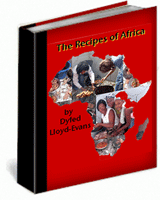
Recipes of Africa eBook
This list of African regions and African recipes is brought to you in association with the Recipes of Africa eBook. With over 1000 recipes covering each and every country in Africa, this is the most comprehensive book of African recipes available anywhere.

If you love African food, or are just interested in African cookery, then the Recipes of Africa eBook is a must-buy. You get information about every region of Africa and every African country along with a selection of classic and traditional recipes from that country.

This is a must-get book for anyone interested in food. Learn about a continent that to this day remains mysterious to many people. The recipes presented here are written by someone who has travelled extensively in Africa and who is a published Author. The book is a properly-produce and published eBook and the collection is immense.

Don't delay, get yourself a copy of the Recipes of Africa eBook today!

Friday, 6 February 2009

Wild Food Guide 'O'

Wild Foods Guide 'O'


This is the fiftenth of my series of 26 postings on wild foods. Each post will deal with a separate letter of the alphabet ('O' today) and will describe a wild food beginning with that letter as well as presenting a classic recipe incorporating that wild food.

Today I'm dealing with the letter 'O', the fiftenth letter of the English alphabet, which includes foods such as Oak, Oyster Plant, Old Man's Pepper, Orache and many others. Today, however I am going to devote this page to Oak Leaves and Orache.


The Oak Quercus spp refers to of any of several hundred species of trees and shrubs in the genus Quercus (from Latin 'oak tree') Oaks have spirally arranged leaves, with a lobed margin in many species; some have serrated leaves or entire leaves with a smooth margin. The flowers are catkins, produced in spring. The fruit is a nut called an acorn, borne in a cup-like structure known as a cupule; each acorn contains one seed (rarely two or three) and takes 6-18 months to mature, depending on species.

In Britain the commonest oak is the sessile oak, Quercus robur and certain parts can be used as a foodstuff. The leaves, when fully fallen from the tree and dry and brown can be used as a bittering agent in mead. It is also possible to make a mead out of young oak leaves. The acorns when roasted and leached of their tannins in running water can be made into a substitute for coffee. But they should be soaked in boiling water before roasting or the resultant drink will be unpleasantly bitter. The same is true for making flour from acorns.

Acorns are the nutty fruit of the various species of the genus Quercus (oak). The acorn itself is a nut, containing a single seed, enclosed in a tough, leathery shell, and borne in a cup-shaped cupule. There are almost 130 species of oaks, all of which generate acorns of one description or other.

Only mature oaks produce acorns and mature oak trees and mature oaks are extremely tough. As a result oak trees will bear their fruit even during the worst droughts. This is why acorns, turned into acorn flour were a survival food during times of drought in all periods up to and including the Middle Ages and why they were very important to the diet of many native Americans.

It should also be remembered that the Europe of the past was a continent of broad-leaved oak-based forests. Oak trees were the natural biological climax and oak trees covered the entire continent. As a result oaks would have been in abundance and acorns along with acorn flour would have been a staple of the diet. Despite this, European (and especially the Englis oak, Quercus robur contain lots more tannin than their North American equivaent, Quercus alba. Tannins are toxic and though roasting removes some tannins the only effective way to leach tannins from acorns is to soak them repeatedly in water. Our ancestors probably suspended baked and shelled acorns in streams for several days before rendering the acorns into flour.

Though acorns, are by far the commonest wild food derived from oak trees, it should be noted that oak laves are also useful as a wild food and here I present a classic traditional recipe for a meat bittered with oak leaves :

Oak Leaf Mead

Ingredients:
4.5l young oak leaves
5l of unchlorinated water
1kg clover honey
2 tsp yeast nutrient
Yeast (Epernay II is good but champagne yeast would also work)

Method:
As with most of the other mead recipes presented on this site, this recipe has been gauged to make 5l of mead. Only a basic listing of ingredients is given, and for a brewing method please see this page for a step-by-step guide. Also see this page for a list of the equipment you'll need.

I used fresh-pulped apples to make the juice, predominantly using sour cooking apples, but the recipe works equally-well with store-bought apple juice. Add the apple juice and 2l water to the boil and add the honey a little at a time as well. When the mixture has boiled, remove the skim from the surface then take off the heat, add the remaining water and the yeast nutrient and allow to cool. When it reaches about 37°C add the yeast and allow to ferment for about four days. At the end of this time strain and add a fresh yeast culture to resume fermentation. You can now return to following the instructions given in the basic mead brewing page to make your mead. Again, this is not a 'short' mead, and you can follow the recipe given for my 'standard' basic mead exactly. As a wine-like mead, once bottled, this preparation needs to be left to mature in the bottle for at least a three months. At this point you can return to following the instructions given in the basic extract brewing page to make your mead. Again, this is not a 'short' mead, and you can follow the recipe given for my 'standard' basic mead exactly. As a wine-like mead, once bottled, this preparation needs to be left to mature in the bottle for at least a three months.

This results in a fairly dry wine (for a mead) and the flavour is interesting.

This recipe is reproduced, with permission, from the Oak Leaf Mead Recipe from the Brewing Recipes collection of the Celtnet Recipes Collection.

If you are interested in recipes for oak leaves then you can find a range of oak leaf recipes.


Orache Atriplex patula, also known as Wild Orache is an annual flowering plant and a member of the Chenopodiaceae (goosefoot) family. Most of which are edible to some degree. Common Orache typically grows to 75cm tall and is in flower from July to September with its seeds ripening from August to October. The flowers themselves are monoecious (ie either male or female) though both flower types are found ona single plant. The plant tends to grow in disturbed ground and requires moist un-shades soil.

Of the entire Goosefoot family, Common Orache is both the commonest of the group and is the one with most flavour. The young leaves can be used raw in salads or can be cooked as a spinach substitute. The seeds can also be ground and mixed into cornmeal, or used as a thickener to soups (thogh they are more than a little difficult to harvest, to say the least).

The recipe presented below is for a classic Greek recipe for a classic dish of leg of lamb stuffed with greens that include orache.

Leg of Lamb Stuffed with Greens and Feta Cheese

Ingredients:
80ml olive oil, plus more for brushing
1 fennel bulb, trimmed (fronds and tender stalks reserved), halved and thinly sliced
250g thinly sliced spring onions
1 tbsp coarsely-chopped garlic
2 garlic cloves, quartered
240g coarsely chopped mixed greens (egs baby spinach, tender Swiss chard leaves, lamb's lettuce, pea shoots, orache, green amaranth, outer leaves of romaine lettuce, and/or beet greens)
1 tsp fennel seeds, freshly ground
freshly-ground black pepper
35g chopped fresh mint
1.8kg half leg of lamb (shank half), with some fat left on and the shank bone left in (remove the hip end of bone if still attached)
100g crumbled Feta cheese
salt, to taste
1 tsp dried oregano, crumbled
120ml dry white wine, (plus more if needed)
75g chopped fennel fronds plus tender stalks, (or fresh dill)

Method:
Heat the oil in a large pan and fry the fennel bulb over medium heat until just tender (about 3 minutes). Add the scallions and chopped garlic and fry for 2 minutes. Add the greens and fry until just wilted. Remove from the heat and stir-in the fennel seeds, adding black pepper to taste. Allow to cool before adding the mint.

With a sharp knife make eight small slits in the lamb and insert the garlic quarters in these.

Meanwhile transfer half the greens to a bowl and set aside. Add the Feta cheese to the remaining greens in the pan and use this to stuff the lamb (where the bone was). Use cocktail sticks to close the opening. Rub the remaining greens over the lamb, cover and refrigerate over night.

The following day scrape the greens from the surface of the lamb (reserve these) and liberally brush the meat with oil before sprinkling with the oregano and seasoning. Place the meat in a roasting dish and roast in an oven pre-heated to 210°C for 20 minutes.

Meanwhile add the wine to a pan and bring to a boil. Add the reserved greens and simmer for 1 minute before pouring this mixture over the meat. Return the lamb to the oven and roast for 5 minutes more. Then reduce the oven temperature to 170°C and roast the lamb, basting frequently with the pan juices, for about 30 minutes more. Add a little water if the pan juices become too dry.

Remove from the oven, sprinkle the chopped fennel or dill then cover with aluminium foil and allow to rest for 15 minutes. Pour the pan juices into a sauce boat then carve the lamb and serve. The perfect accompaniment are potatoes roasted with garlic, lemon and oregano.


This recipe is reproduced, with permission, from the Leg of Lamb Stuffed with Greens and Feta Cheese Recipe from the Celtnet Greek Recipes Collection, part of the Celtnet Northern European Recipes Collection

If you are interested in recipes for Common Orache then you can find a range of common Orache recipes.

This guide is brought to you in conjunction with the Celtnet Wild Food Recipes collection.

You can find more wild foods beginning with the letter 'O' on the Wild Food Guide for the letter 'O', part of the Celtnet Wild Food Guide.
Related Posts Plugin for WordPress, Blogger...

Popular Posts